

SafeSketch LearningGet the illustrated guide
For UK supervisors, technicians and career changers studying the NEBOSH General Certificate

Turn dense NG1 revision into clear workplace pictures and answer steps

This illustrated PDF shows common hazards, practical controls, UK legal duties and the management topics that appear across the NEBOSH General Certificate syllabus. It also shows how to read an NG1 open-book scenario, pick evidence from the text, and shape answers that are specific rather than generic.

Get the illustrated guide

Secure checkout, PDF by email within a few hours, and a 7-day full refund guarantee.

One topic per page

The drawing shows the rule; the text backs it up.

56 illustrated pages

7 parts, from Spotting Hazards to NG1 Scenario Answers.

Up-to-date sources

NEBOSH syllabus, HSG65 and HSE guidance.
See how the pages work

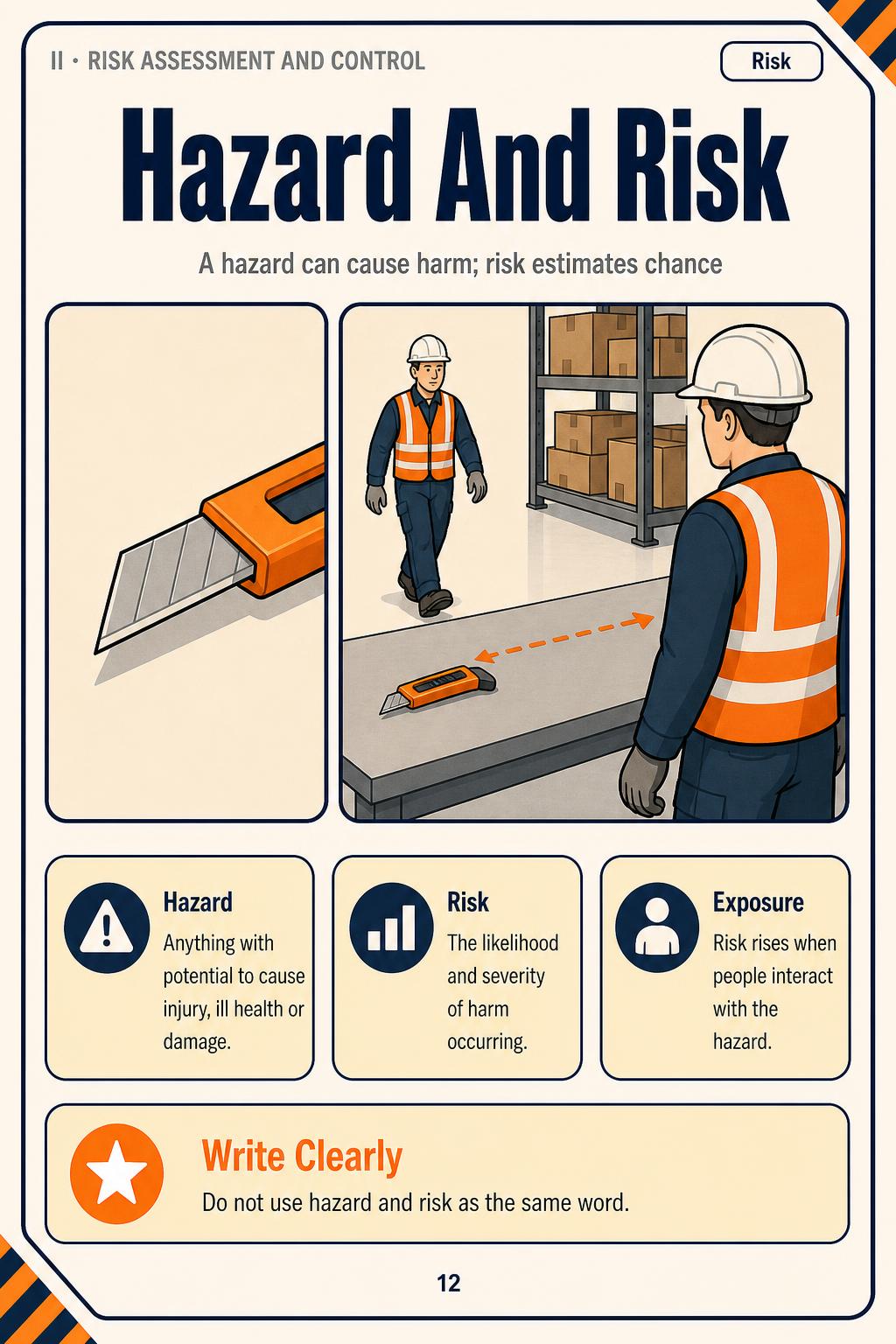
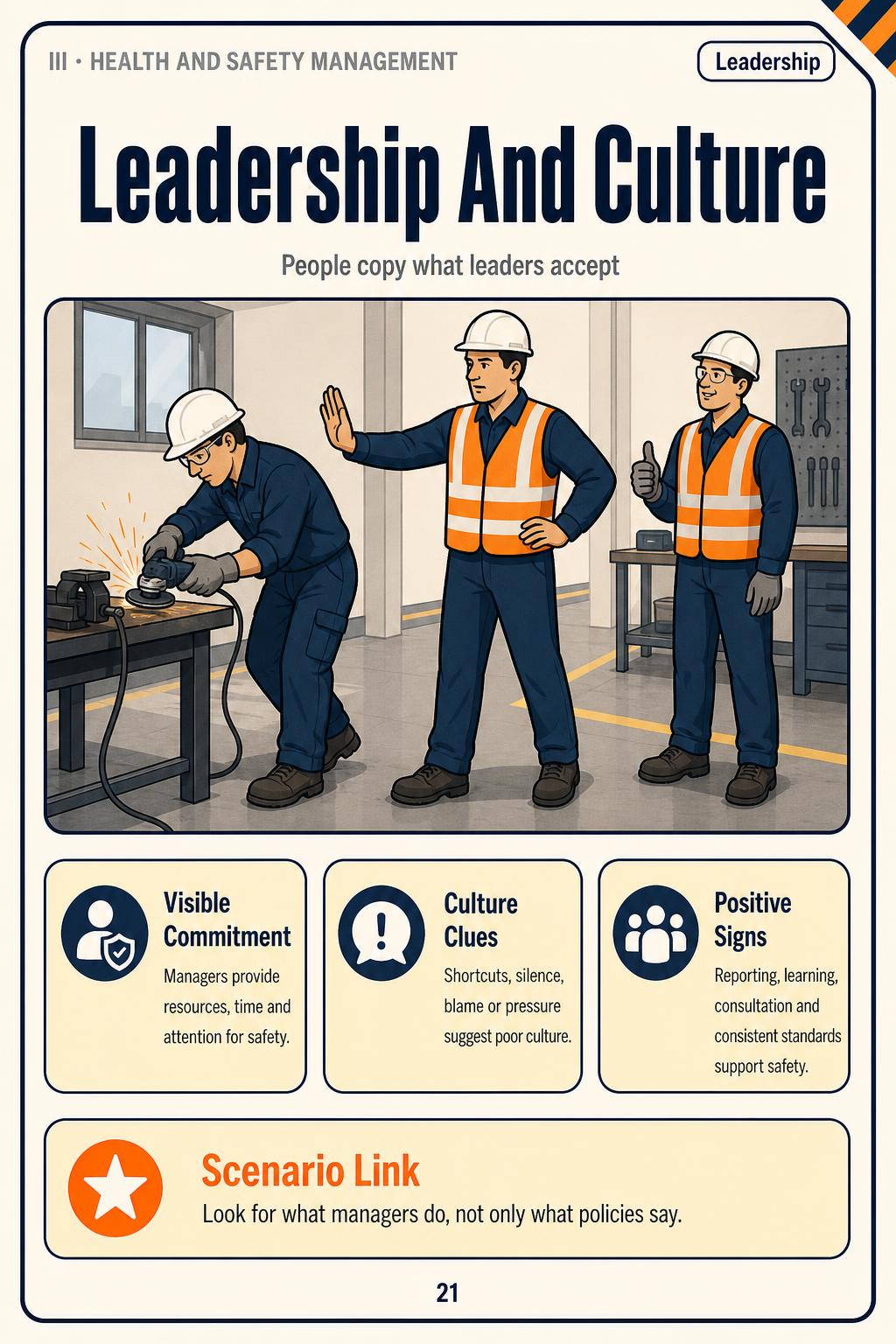
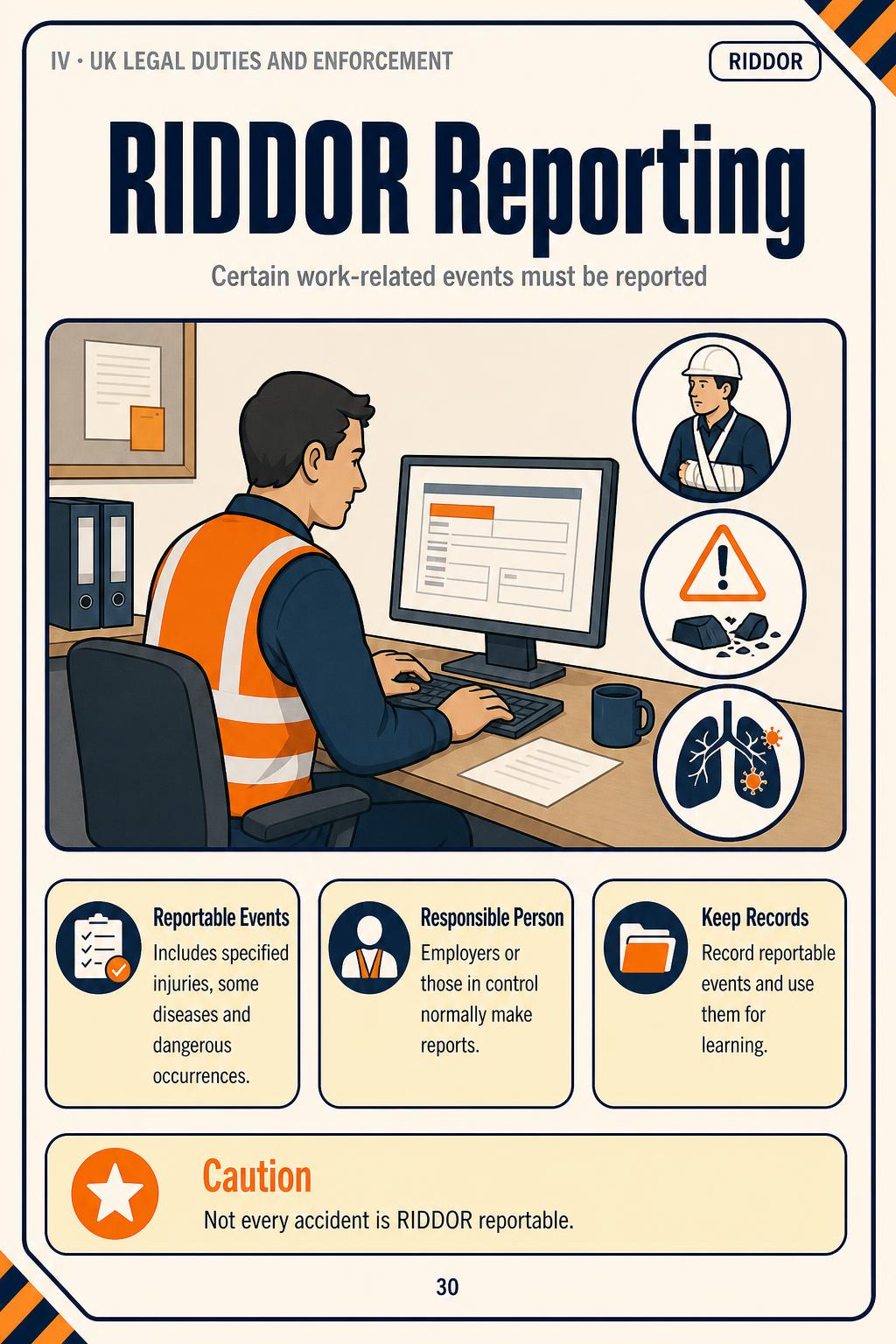
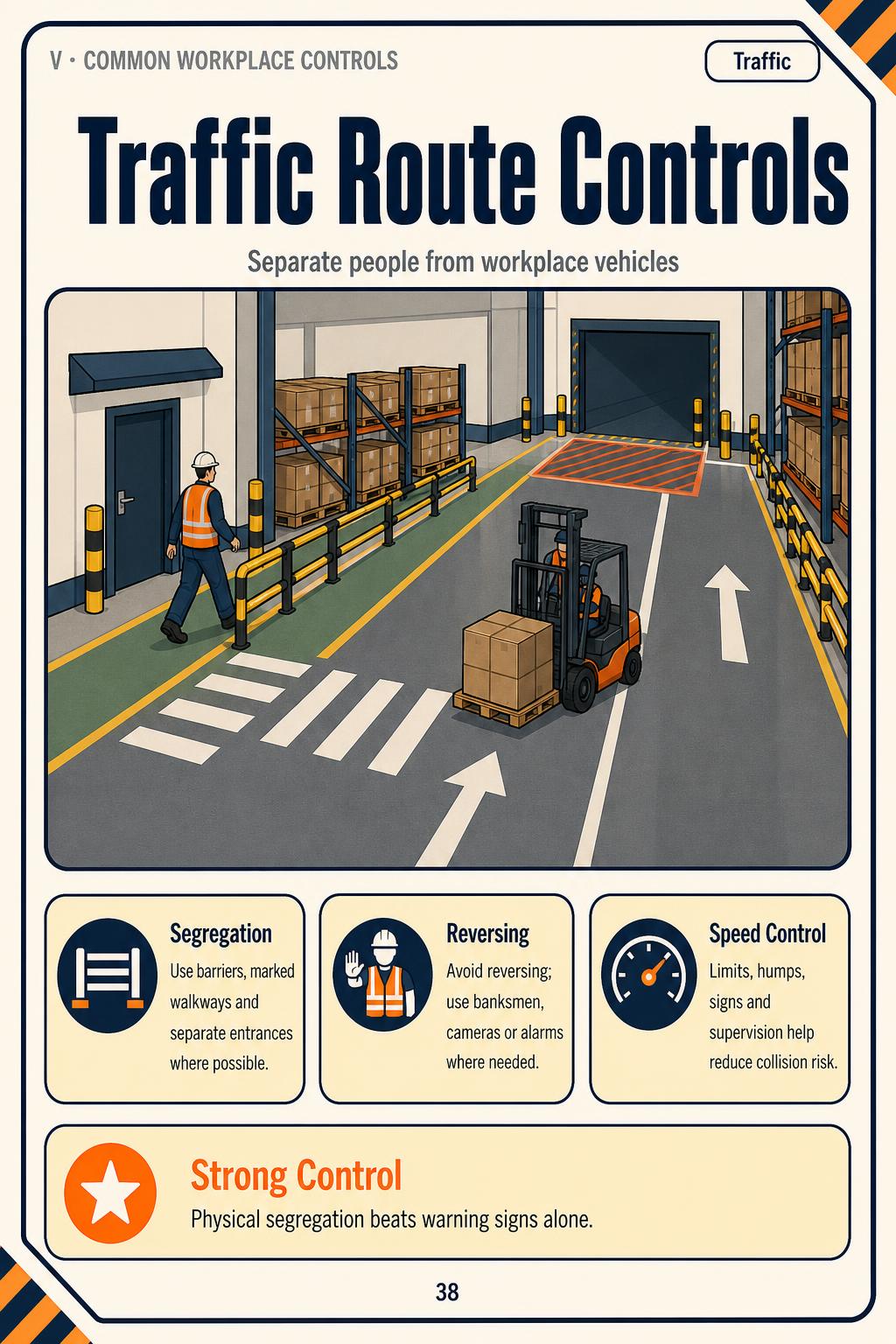
The guide is built around real study pages: a hazard scene, the key rule, the control options, and a short NG1-style writing prompt where it fits.

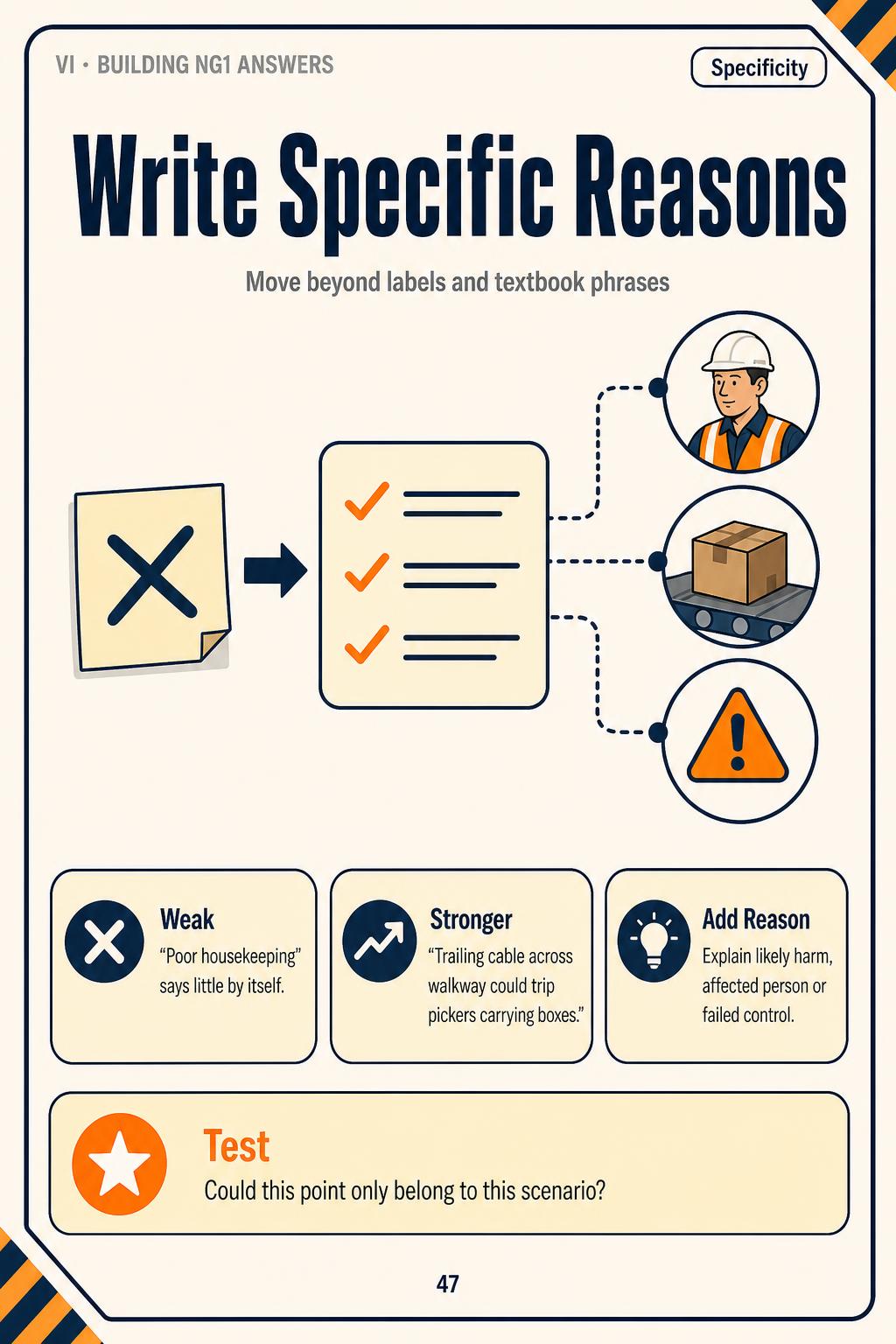
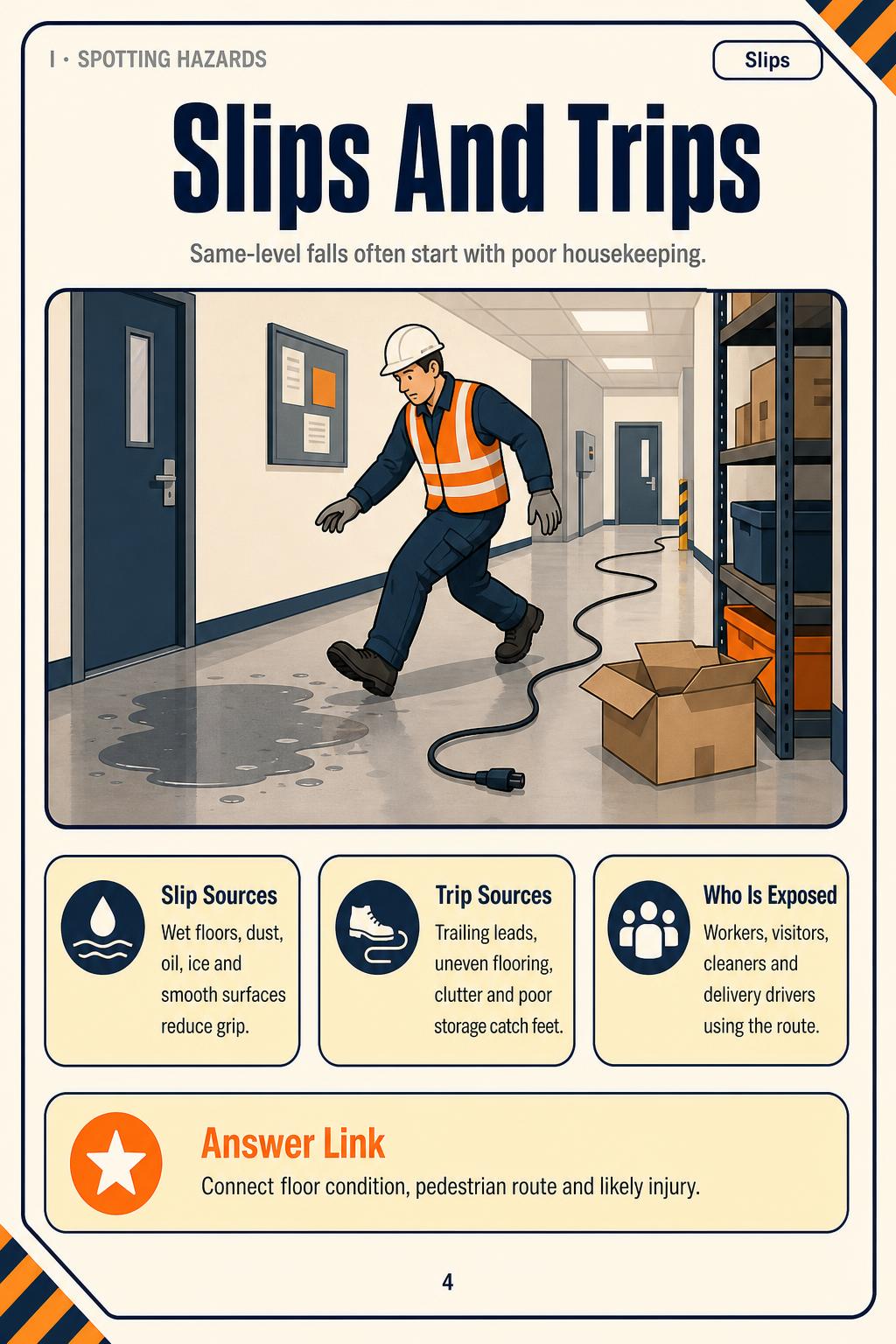
Slips And TripsHazard And RiskLeadership And CultureRIDDOR ReportingTraffic Route ControlsWrite Specific Reasons

Sample pages are representative of the guide’s visual style and layout; they do not copy official exam questions.

You know the topic, but the answer still feels hard to write

You finish work, open your course notes, and the NG1 scenario still looks like a wall of detail.

You can recognise the obvious hazards, but then you wonder what NEBOSH wants you to do with them. Is it enough to list controls, or do you need to explain why they fit the scenario?

You search online and find long explanations of risk assessment, legal duties and management systems. They are useful, but they do not show you how to turn a messy workplace story into a clear written response.

Your tutor may have explained the assessment once, but when you sit alone with a practice scenario, the blank page feels different.

That is not your fault. Most study material explains the subject in text first, when many learners need to see the workplace problem before they can write about it.

From passive reading to usable answer notes

The usual way

  • Long paragraphs that describe the law but not the scene.
  • Generic control lists with no link to the worker or task.
  • Practice notes that do not show how an NG1 answer is built.

A suitable and sufficient risk assessment should identify significant hazards, decide who may be harmed and how, evaluate existing precautions, record significant findings and review the assessment where necessary. Control measures should follow the general principles of prevention, giving preference to elimination and substitution before engineering controls, administrative controls and personal protective equipment, taking account of competence, supervision, maintenance and emergency arrangements.

The picture-led way

  • A workplace scene shows the problem before the explanation.
  • Controls are grouped so you can see stronger and weaker options.
  • NG1 prompts show how to connect evidence, risk and action.

What is inside the guide

The full guide is organised as a visual route through the core NG1 study areas: spotting hazards, choosing controls, understanding management duties, and writing scenario-based answers.

ISpotting Hazards

  • Slips, trips and same-level falls
  • Work at height and falling objects
  • Workplace transport and pedestrians
  • Manual handling and awkward postures
  • Hazardous substances and exposure routes
  • Electricity, damaged equipment and isolation
  • Fire, ignition sources and combustible materials

IIRisk Assessment and Control

  • Hazard, risk, likelihood and severity
  • The five steps of risk assessment
  • Hierarchy of control in practical order
  • Safe systems of work and method statements
  • Permits to work for higher-risk tasks
  • Competence, training and supervision
  • Emergency planning and first response

IIIHealth and Safety Management

  • Policy, organisation and arrangements
  • Leadership, commitment and safety culture
  • Consultation with workers and representatives
  • Roles, responsibilities and contractor control
  • Inspections, audits and active monitoring
  • Incident reporting and investigation
  • Reactive monitoring and performance indicators

IVUK Legal Duties and Enforcement

  • Health and Safety at Work etc. Act 1974
  • Management of Health and Safety at Work Regulations 1999
  • RIDDOR 2013 reporting duties
  • COSHH 2002 and exposure control
  • Work at Height Regulations 2005
  • PUWER, LOLER and work equipment duties
  • Improvement notices, prohibition notices and prosecution

VCommon Workplace Controls

  • PPE as the last line of defence
  • Machine guarding and isolation
  • Traffic routes, segregation and reversing
  • Storage, housekeeping and waste control
  • Welfare, rest areas and basic facilities
  • Noise, vibration and exposure reduction
  • Signage, supervision and workplace rules

VIBuilding NG1 Answers

  • Reading the scenario before answering
  • Recognising command words and task focus
  • Picking evidence from the workplace story
  • Writing specific reasons, not labels
  • Linking hazards, consequences and controls
  • Prioritising actions and justifying recommendations
  • Checking answers for relevance and repetition

VIING1 Scenario Answers

  • Setting up your answer plan
  • Positive and negative indicators in a scenario
  • Management failures hidden in the story
  • Worker behaviour and organisational causes
  • Recommendations with who, what and why
  • A warehouse-style practice scenario breakdown
  • Final answer check before submission

Imagine opening the scenario with a clearer plan

You read the workplace story and start marking hazards with purpose, not panic.

A poorly stored chemical is no longer just a hazard; you can link it to exposure, COSHH duties, training, labels, storage and emergency arrangements.

A weak answer such as “give PPE” becomes a better answer that explains why higher-level controls, supervision and maintenance should come first.

When a question asks for reasons, actions or recommendations, you know how to pull evidence from the scenario and write in complete points.

You still need to study and practise, but the subject feels less like scattered notes and more like a workplace you can walk through.

Get the illustrated guide

What you get in the guide

I

Spotting Hazards

This part shows everyday workplace hazards as visible scenes rather than abstract headings. After it, you can identify likely harm, affected people and immediate red flags in a scenario.

II

Risk Assessment and Control

This part explains how hazards become assessed risks and how controls should be selected. After it, you can move from observation to proportionate action using recognised prevention principles.

III

Health and Safety Management

This part turns management system topics into simple workplace pictures. After it, you can explain how leadership, communication and monitoring affect real safety performance.

IV

UK Legal Duties and Enforcement

This part gives study-focused summaries of key UK health and safety duties relevant to NG1. After it, you can connect legal duties to practical employer, manager and worker actions.

V

Common Workplace Controls

This part groups frequent control measures so you can choose better answers than a simple PPE list. After it, you can suggest controls that are practical, layered and relevant to the task.

VI

Building NG1 Answers

This part focuses on how to read an open-book scenario and prepare usable answer points. After it, you can spot command words, use scenario evidence and avoid vague textbook lists.

VII

NG1 Scenario Answers

This part models the thinking process behind clearer scenario responses without copying official exam content. After it, you can practise turning observations into structured paragraphs and action points.

The guide ends with a final NG1 answer-check page you can use before submitting practice responses.

Plus, included free

NG1 Scenario Reading Checklist
A short illustrated checklist for breaking down a scenario, spotting key clues and avoiding common reading traps.
Free with your purchase · 4 pages
Command Words Cheat Sheet
A practical visual guide to common NG1 command words and what your answer needs to do for each one.
Free with your purchase · 4 pages
Revision Sprint Plan
A compact illustrated plan for structuring focused NG1 revision sessions without feeling lost or overloaded.
Free with your purchase · 6 pages
Get the guide and the bonuses

Included with your purchase

NEBOSH General Certificate in Pictures: NG1 Scenario Guide + 3 free bonuses

NEBOSH General Certificate in Pictures: NG1 Scenario GuideUS$ 46
Bonus 1: NG1 Scenario Reading ChecklistUS$ 15
Bonus 2: Command Words Cheat SheetUS$ 15
Bonus 3: Revision Sprint PlanUS$ 15
PDF by email, to read on your phone or printIncluded

Total value: US$ 91

Your visual NG1 study guide

US$ 46

You save US$ 45

Get the illustrated guide · US$ 46

The guide arrives as a PDF by email within a few hours of your purchase, so please check the email address you use at checkout.

Is this guide right for you?

A photorealistic candid photo of a British man in his early thirties at a kitchen table in Manchester, wearing a fleece

Starting your course

Use the pictures to build a mental map of hazards, controls and management topics before the detail piles up.

A photorealistic candid photo of a British woman in her forties in a quiet library in Birmingham, glasses on, reviewing

Assessment date approaching

Use the answer-planning pages to practise reading the scenario and turning evidence into relevant points.

A photorealistic candid photo of a British maintenance supervisor in his fifties in a factory break room in Leeds, hi-vi

Moving into safety

If you already know workplaces but not exam wording, the guide helps you connect practical experience with NG1-style explanations.

Not ideal if you need An official NEBOSH publication or past paper pack. · A replacement for your accredited course or tutor feedback. · A promise that any guide can guarantee a pass.

7day guarantee

7-day full refund guarantee

You have 7 days to read through the guide. If it is not useful for your study, email within that period and you will receive a full refund.

100% refundOne-time paymentNo subscription

Questions before you buy

What format is the guide?

It is a PDF guide with illustrated pages, short explanations and NG1-style planning prompts.

When will I receive it?

Your PDF is sent by email within a few hours of purchase. If it has not arrived, check your junk folder and then contact support.

Can I read it on my phone or tablet?

Yes. You can open the PDF on a phone, tablet, laptop or desktop, although the illustrated pages are easiest to study on a larger screen.

Is this suitable for beginners?

Yes. It is written for learners who need the core NG1 ideas explained visually and practically, without assuming years of safety experience.

Can I print the pages?

Yes. The guide is designed to be printable for personal study, so you can highlight, annotate and build your own answer notes.

Is this official NEBOSH material?

No. It is an independent study guide. It does not use NEBOSH logos, copy official questions or replace your accredited course material.

Will this guarantee I pass NG1?

No guide can honestly guarantee that. This guide helps you revise visually and practise answer structure, but your result depends on your study, course requirements and assessment performance.

How does the refund work?

The guide has a 7-day full refund guarantee. Email within 7 days if it is not useful for you, and the purchase will be refunded.

Make NG1 feel more concrete

If your notes feel too dense, this picture-led guide gives you a clearer way to see the workplace, choose controls and practise scenario answers at your own pace.

Get the illustrated guide

Secure checkout, PDF by email within a few hours, and a 7-day full refund guarantee.